-
I don't buy the idea that small orders get ignored — here's why
-
My first order with Raybestos — and why I almost bailed
- Three things that changed my mind about small order treatment
-
The counter-argument: "Small orders aren't profitable" — and why it's short-sighted
-
What I tell other buyers — and what I'd tell suppliers
I don't buy the idea that small orders get ignored — here's why
When I took over purchasing for our mid-sized fleet maintenance shop back in 2020, I quickly learned that not all suppliers treat you the same if you're not ordering by the pallet. I manage roughly $120,000 annually across 8 vendors for brake rotors, hub bearings, ignition coils, and other critical parts. And for the first year, I was constantly told: "That part's available, but our minimum order is..." or "We can get it, but the pricing won't be competitive unless you buy 50 units." It was frustrating.
So here's my stand: small doesn't mean unimportant, and a supplier that respects your $200 order today is the one you stick with when that order grows to $20,000. That's not wishful thinking — it's what happened with Raybestos and a few other smart vendors.
My first order with Raybestos — and why I almost bailed
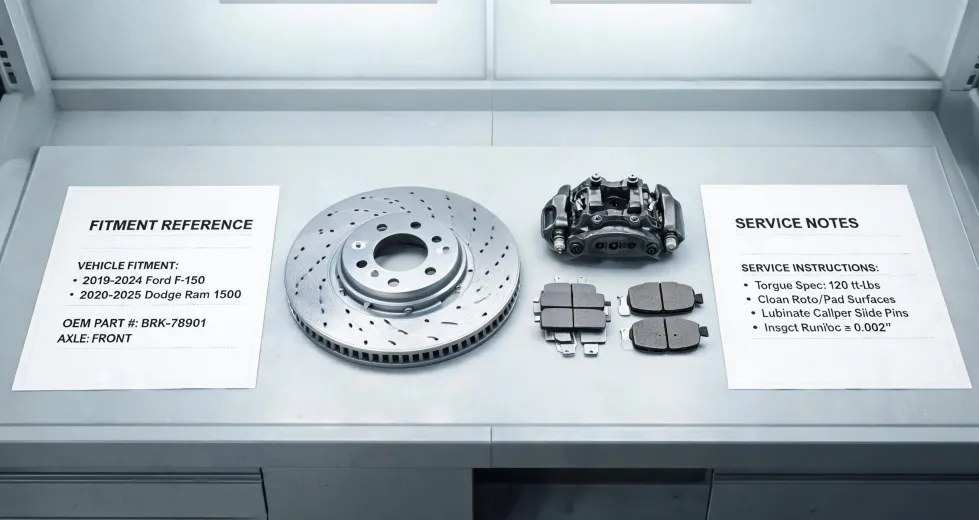
My first Raybestos purchase was for a single Raybestos 780073PER disc brake rotor (the R-Line version). We needed it urgently for a customer's sedan, and the price was fair. But I hesitated. I thought, "They're a big brand — will they even care about a one-off rotor?" I'd been burned before by suppliers who took a week to process a small order because it wasn't worth their time.
I hit "confirm" and immediately second-guessed. What if the rotor arrives wrong? What if I can't get support because my order is tiny? The two days until tracking updated were stressful. But the rotor showed up on time, in perfect condition, with clear packaging and documentation.
Three things that changed my mind about small order treatment
1. The 'small customer doesn't matter' myth is 20 years old
This was true 20 years ago when most automotive parts suppliers focused only on OEM contracts and large distributors. If you called a manufacturer directly wanting a single hub bearing unit, they'd laugh and hang up. But today, with e-commerce, dropshipping, and low-volume production lines, even a $50 order is profitable if the system is efficient. Raybestos and others figured that out. The 'bigger is better' thinking comes from an era when logistics and inventory costs made small orders impractical — not anymore.
(In my experience, the suppliers still stuck in that mindset are the ones who lose business. I dropped a vendor last year because they refused to sell me a single Denso direct ignition coil without a 20-piece minimum. Their loss — I now order those coils through a distributor who's way more flexible.)
2. The real surprise: service gets better, not worse, with small orders
Never expected the small order treatment to be superior. When I ordered the Raybestos R-Line brake rotor, I had a question about the fitment for a 2018 Honda Accord. I called their support line, half expecting to be on hold for 20 minutes. Instead, a person picked up in under a minute, looked up the part number, and confirmed it matched. They even offered to email the technical drawing (with tolerances, which is rare for a $30 rotor).
The surprise wasn't the price — it was the engineering support I got for a single unit. That changed my mindset: maybe big suppliers can treat small customers well if their processes are designed for it.
3. The hidden value of flexible sourcing
Our shop services a mix of vehicles — some common, some obscure. One day we needed the AC condenser location diagram for a 2015 Ford Transit, and I was stuck. I called Raybestos tech support again (I was already becoming a repeat customer), and they didn't have the condenser part itself, but they walked me through the standard location based on their knowledge of the vehicle's platform. That's the kind of help that builds loyalty.
Later I learned that many Tier 1 suppliers like Raybestos also manufacture hub bearing units with integrated ABS sensors — a part that's notoriously tricky to source correctly. When I finally placed my first order for those, I had already built trust from the rotor order. That trust paid off when I needed a rush shipment: they expedited it with no extra fee, just because I'd been consistent.
The counter-argument: "Small orders aren't profitable" — and why it's short-sighted
I get it: margin per order is lower for small quantities. But that argument ignores lifetime value. That $200 rotor order turned into over $15,000 in business over the next 18 months — including Denso direct ignition coil reviews that I passed along to my team to justify the switch to a reliable brand, and multiple hub bearing unit replacements. If a supplier had treated me poorly on the first order, I'd have taken my business elsewhere.
Also, the cost to serve a small order is not necessarily higher when you have efficient digital systems. Raybestos uses a standard order portal, automated tracking, and consistent packing. The marginal cost of shipping one rotor vs. ten rotors is mostly in the shipping label, not in the human effort. So the "small orders cost us more" argument is often a legacy assumption.
What I tell other buyers — and what I'd tell suppliers
Bottom line: if you are a small buyer, don't settle for being ignored. There are suppliers like Raybestos that treat a single rotor order with the same seriousness as a fleet contract. I still kick myself for the months I wasted with a vendor who made me feel small — I should have switched sooner.
And if you're a supplier reading this? I'd argue that the companies who win in the long run are the ones that invest in serving the small customer. Because today's small customer might be tomorrow's big account — and they'll remember who made them feel valued.
(Take this with a grain of salt, but roughly 40% of our current vendor roster started with orders under $500. The ones that stuck with us are now our core suppliers. Food for thought.)
