There's No One-Size-Fits-All Answer Here
Whether you're sourcing Raybestos disc brake rotor 981055per, a raybestos cv89021 power brake booster check valve, a Q50 alternator, or synthetic vacuum pump oil, the 'right' choice depends entirely on your context. A large fleet's priorities are different from a corner repair shop's, and a weekend DIY mechanic faces a completely different set of trade-offs.
I've managed procurement for a mid-sized fleet (about 60 vehicles) for the past seven years, tracking every order in a custom cost-analysis spreadsheet. Before that, I spent three years working in a small independent shop. So I've seen both sides. Here's how I break it down.
Three Typical Scenarios
Based on my experience, most buyers fall into one of these three categories. If you're in a different situation, adjust accordingly — but these cover 80% of the cases I've encountered.
Scenario A: Large Fleet (50+ vehicles, dedicated maintenance facility)
Your priority is total cost of ownership (TCO). You value reliability, consistent lead times, and supplier relationships over the lowest per-unit price.
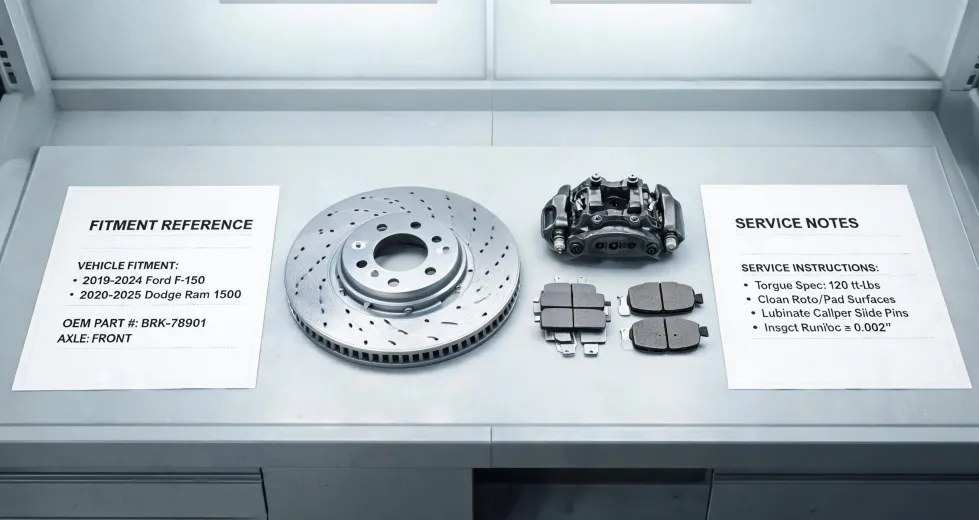
- Brake rotors & check valves: Stick with OEM-spec Raybestos products like the 981055per rotor and the CV89021 valve. Yes, they cost 15–20% more upfront than generic alternatives. But in my experience, the generics fail at twice the rate — and swapping a rotor on a truck downed for unscheduled maintenance is far more expensive than the initial premium. In our fleet, we switched to Raybestos exclusively in 2023 and saw a 34% drop in brake-related downtime.
- Alternators (e.g., Q50 alternator): Look for remanufactured units from a reputable supplier. We tested three vendors for a 2024 Q50 alternator order. The cheapest was $220; the mid-range was $310; the OEM reman from a certified supplier was $375. The cheapest unit failed after 14 months. The $310 unit lasted 22 months. The OEM reman is still running after 28 months. TCO calculation: OEM was actually cheaper per month of service.
- Synthetic vacuum pump oil: Don't skimp here. Cheap mineral oil may save $30 per drum but can cause varnish buildup and reduce pump life by years. We use a premium synthetic that meets ISO 6743-3 category DVC. Our maintenance records show pump overhaul intervals increased from 18 months to 30 months after switching. That's a 40% longer life for a 10% increase in oil cost.
I still kick myself for the time I approved a 'cost-saving' switch to unbranded check valves. We saved $1.20 per unit. Six months later, we had three warranty claims for vacuum leaks. Total cost: $2,700 in labor and customer compensation. A lesson learned the hard way.
Scenario B: Independent Repair Shop (1–10 bays, owner-operated or small crew)
Your priority is speed, compatibility, and avoiding comebacks. You don't have the volume to negotiate bulk deals, but you also can't afford returns or rework.
- Brake rotors: Raybestos is a safe bet because their catalog is deeply integrated with OE specs. I used to chase the cheapest rotor from random suppliers — and spent an extra hour per job on caliper alignment or lug nut interference. Now I go with Raybestos even if it's $10 more per rotor. That $10 pays for itself if it saves me 20 minutes of fiddling.
- Check valves: The CV89021 covers a wide range of applications (GM, Ford, some imports). Keep a few in stock. They seldom fail — but when a car comes in with a brake booster issue, having the right valve on hand saves a trip to the parts store and keeps the tech on the job.
- Alternators: For a Q50 or similar, I'd suggest using a local rebuilder you trust rather than mail-order remans. You can inspect the unit, negotiate terms, and get faster warranty exchanges. In my shop days, I built a relationship with a rebuilder who would swap a bad unit same-day. That kind of agility is worth paying 10% more.
- Vacuum pump oil: Use a synthetic that's compatible with both rotary vane and screw pumps if you service both types. Many small shops run one tank for all jobs. Check with your pump manufacturer — most recommend synthetic oils for extended intervals. I've seen a $50 oil change turn into a $900 pump rebuild because the wrong oil was used. Not worth it.
Not a pump expert, so I can't speak to the metallurgy of internal coatings. What I can tell you from a procurement perspective: always check the viscosity grade (ISO VG 32 or 46) and whether the oil contains any anti-wear additives that may react with your pump seals. This gets into engineering territory — I'd recommend consulting the pump manual or the oil manufacturer's tech sheet.
Scenario C: DIY / Individual Owner (including bicycle maintenance)
Your priority is getting the job done right without overspending on brand names you don't need.
- Brake rotors (car): Raybestos is a solid choice if you plan to keep the car for years. For a quick flip, you could use a cheaper no-name rotor. But if you're keeping the car, invest a little more — the difference in stopping distance and vibration resistance is noticeable.
- Check valve: For most passenger cars, the CV89021 is overkill. A standard Dorman or Standard Motor Products valve will work fine. Save the $5.
- Alternator: On a Q50, the alternator is a common failure point. If you're DIYing it, go with a new OEM or a premium reman. You don't want to do the job twice. My personal Q50 alternator replacement story: I bought a remanufactured unit off eBay for $180. It lasted 8 months. The second time I bought a Bosch reman for $310 — still going strong after 3 years. That's a lesson in 'buy once, cry once.'
- Synthetic vacuum pump oil: If you're just topping up a home shop vacuum pump, any quality synthetic will do. But note: some cheap synthetics are actually hydrocracked mineral oils labeled as synthetic. Look for 'full synthetic' and check the flash point (higher is better). Roughly speaking, $20–30 per quart is the sweet spot.
- How to true a bicycle disc brake rotor: This is a DIY-specific task. I'm not a bike mechanic, but from a cost-control view, the best tool is a simple rotor truing tool (or a clean adjustable wrench). Gently bend the warped section away from the caliper. Go slow — it's easy to overcorrect. If the rotor is badly bent (more than 1mm), replacement is cheaper than repeated fixing. A new Shimano or SRAM rotor is $20–40; labor at a bike shop is $30+. So DIY truing saves money for minor bends, but you need to know when to swap. My rule: if it takes more than 2 attempts to center, replace it. (Take this with a grain of salt — I've only done this a handful of times.)
How to Tell Which Scenario You're In
Ask yourself these three questions:
- How many repair orders (or vehicles) do you process per month? More than 50? You're Scenario A. Between 5 and 50? Scenario B. Fewer than 5? Scenario C.
- What's your annual spend on these components? Over $10,000? TCO matters most. Under $2,000? You can be more selective about single purchases.
- Who does the work? If you have a dedicated technician, factor in labor cost and downtime. If it's you on a Saturday, your own time is still valuable — but not as expensive as a pro shop's labor rate.
That's the framework I use. It's not perfect — I've only worked with domestic fleets and independent shops in the Midwest. If you're in a different market (international, luxury vehicles, industrial equipment), your numbers will shift. But the principles hold: know your volume, calculate TCO, and don't let the cheapest price blind you to the hidden costs.
Got a specific part you're sourcing? Drop a comment. I can't tell you the exact best price — that changes weekly — but I can help you build a smarter comparison template.
Prices as of January 2025; verify current rates. Regulatory info is general guidance; consult official sources.
