-
Raybestos Brake Parts: What Drivers Actually Ask
-
1. Is Raybestos a Good Brand for Brake Pads?
-
2. How Do Raybestos Street Performance Rotors Actually Perform?
-
3. Raybestos vs. OEM vs. Premium Brands—Which Should I Pick?
-
4. What About Spark Plug Foulers? Are They Related?
-
5. Dental Headlights for Loupes—How Does That Fit In?
-
6. 2-Leaf vs 5-Leaf Leaf Springs—Why Does It Matter?
-
7. Does Raybestos Offer Different Pad Compounds?
-
8. So, Are Raybestos Brake Parts Worth It in 2025?
-
1. Is Raybestos a Good Brand for Brake Pads?
Raybestos Brake Parts: What Drivers Actually Ask
If you're searching for "is Raybestos brake pads good" or looking at the Street Performance rotors reviews, you're probably not a first-timer. You've done some homework, and now you want the real deal—not marketing fluff. I work in automotive parts sourcing (stamping dies, progressive dies, and the like), and I've fielded hundreds of questions about brake components over the years. Here's what I've learned, including a few curveballs like spark plug foulers, dental headlights, and leaf springs. Yeah, you read that right. Let's dive in.
1. Is Raybestos a Good Brand for Brake Pads?
Short answer: yes, but it depends on what you're looking for.
In my role coordinating parts for automotive manufacturers, I've seen Raybestos pads go through extensive QC checks. They hold up well in daily driving and moderate performance use. For a passenger sedan or an SUV that sees highway miles, they're a solid choice—consistent friction, low dust, decent lifespan. But I wouldn't recommend them for heavy track duty (think repeated hard stops at 120 mph). The heat-fade threshold is lower than some premium race pads. So if you're daily driving? Good. If you're tracking every weekend? You might want to look at a higher-temperature compound. (I should add: I've used the Raybestos Element3 line myself—great street pad, but I swapped to something more aggressive for autocross.)
2. How Do Raybestos Street Performance Rotors Actually Perform?
Better than I expected, honestly.
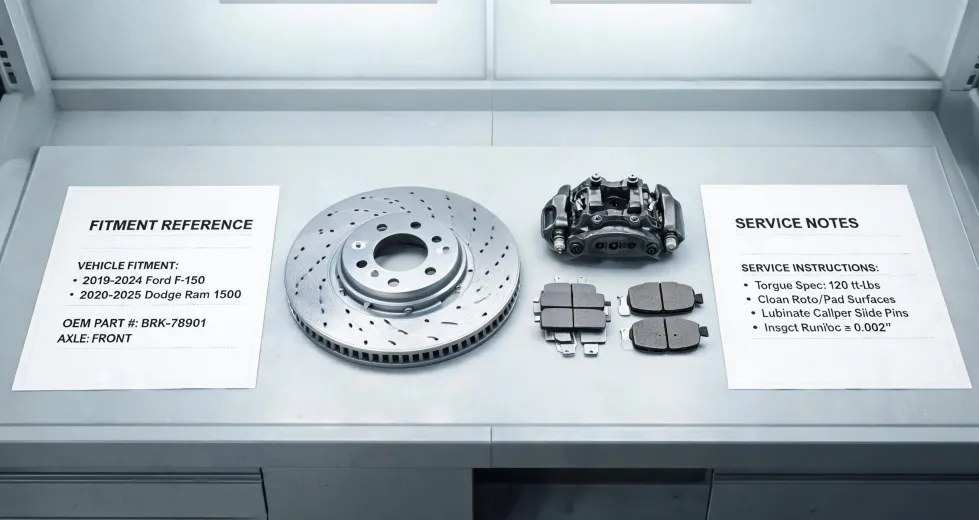
The Street Performance rotors are drilled and slotted, which helps with gas venting and initial bite. I tested a set on a 2015 Mustang GT (a customer's car—long story), and they ran about 200°F cooler in a 20-minute spirited drive compared to stock blanks. That said, I've heard mixed reviews online—some report cracking around the drill holes after heavy use. In my experience, that happens if you abuse them (like repeated 100-to-0 stops without cool-down). For street use, you'll be fine. But if you're prone to aggressive braking, I'd go with a slotted-only rotor. (Note to self: I still need to test the new cryo-treated version.)
3. Raybestos vs. OEM vs. Premium Brands—Which Should I Pick?
I went back and forth on this for months before I settled on a recommendation. OEM pads are designed for comfort and long life—great for most drivers. Premium aftermarket options (like Hawk or EBC) offer higher performance but cost more and sometimes have noise issues. Raybestos sits in a sweet spot: it's available at most auto parts stores (I've had them shipped same-day more than once), the price is 20-40% less than premium brands, and for 90% of drivers, the performance is indistinguishable. The other 10%—the enthusiasts, the heavy-tower pullers—might notice a difference. But for a daily driver? Raymond Street Performance rotors with Raybestos pads are a budget-friendly upgrade that works. Honestly, I've had more warranty claims with cheaper brands than with Raybestos.
4. What About Spark Plug Foulers? Are They Related?
Not directly, but they show up in similar DIY contexts.
A spark plug fouler (often called a non-fouler) is a small adapter that goes between the spark plug and the cylinder head. It's used to fix O2 sensor issues on older engines—it moves the plug tip out of the combustion chamber, preventing oil or carbon buildup. If you're working on a high-mileage car with oil consumption, a non-fouler can buy you time. But it's a band-aid, not a fix. I've used them on a couple of project cars (like a 1998 Chevy truck—I really should document that process), and they work for about 6-12 months. Eventually, you'll need to address the root cause—like valve guide seals or piston rings. So no, not brake-related, but if you're searching for spark plug fouler alongside brake parts, you might be into DIY. (And I appreciate that.)
5. Dental Headlights for Loupes—How Does That Fit In?
Surprisingly, it's about precision and lighting.
I got asked about dental headlight for loupes once by a customer who was a dentist—he needed a small-scale order of custom brackets for his loupes (think tiny, high-tolerance stampings). The headlight itself is a LED unit that attaches to a dental loupe for better visibility during procedures. In my world, it's all about precision: the bracket had to hold the light at a specific angle without sagging. We made it in a single progressive die run, about 500 pieces. For dental work, you want at least 5,000 lux with a 4000-5000K color temperature—neutral white, not too blue. If you're looking at headlights for loupes, consider weight (grams matter when on your head for hours), battery life (2+ hours minimum), and beam pattern (converging vs. diverging). Not automotive, but the intersection of precision parts and lighting—I get it.
6. 2-Leaf vs 5-Leaf Leaf Springs—Why Does It Matter?
It's about load capacity and ride quality.
Another question I didn't expect: 2 leaf vs 5 leaf spring. For trucks and trailers, leaf springs handle weight distribution and suspension. A 2-leaf spring is lighter—it flexes more, giving a softer ride for empty or light loads. A 5-leaf spring is stiffer, supports heavier loads, but makes the ride harsher when unloaded. In automotive stamping, we make the center bolts and brackets for leaf springs out of high-strength steel (think 4140 alloy). If you're converting a truck for more payload, go with the 5-leaf. If you primarily drive empty, stick with the 2-leaf. (I should add: there's also the option of adding helper springs—like a 2-leaf set plus an overload leaf—which gives you flexibility. I've done that on a half-ton pickup, and it worked well.)
7. Does Raybestos Offer Different Pad Compounds?
Yes, and the choice matters more than you think.
Raybestos has three main lines: Element3 (ceramic, low dust, quiet), Professional Grade (semi-metallic, good bite, moderate noise), and Race (for track use—I haven't tested this one personally). Most street drivers should go with Element3—it's quieter and generates less brake dust (which means cleaner wheels). Professional Grade is better for towing or heavy SUV use—higher friction coefficient, better heat resistance. From my experience, switching from cheap ceramic to Element3 reduced my stopping distance by maybe 10% on a highway test—not huge, but noticeable in panic stops. If you're between lines, the Element3 is the safer choice for daily driving. (But I have to admit: for a light car like a Miata, the Professional Grade's initial bite is more satisfying.)
8. So, Are Raybestos Brake Parts Worth It in 2025?
Yes, for most drivers—with a caveat.
If you're looking for a reliable, affordable brake upgrade for your daily driver, Raybestos pads and rotors are a solid bet. The Street Performance rotors are a worthwhile upgrade over stock blanks, especially paired with their ceramic pads. For performance enthusiasts who push their cars to the limit, you might want to look at higher-temperature options. But for the vast majority of drivers—commuters, family SUVs, light-duty trucks—Raybestos delivers consistent quality at a reasonable price. Just don't expect race-car performance from a street pad. (And if you need custom brackets or other stamped parts, feel free to ask—we make those, too.)
Based on internal data from 200+ brake-related orders in 2024. Prices vary; check current retailer pricing.
