-
The Single Biggest Mistake I See in Automotive Parts Procurement
-
What We Get Wrong About Cheap Parts
-
The ‘Penny Wise, Pound Foolish’ Trap I Fell Into
-
Why Industry Evolution Demands a New Sourcing Logic
-
What About Budget Constraints? (A Fair Question)
-
Final Word: It’s Time to Refresh Your Vendor Scorecard
The Single Biggest Mistake I See in Automotive Parts Procurement
I’m convinced that the old “lowest unit price wins” mentality is the fastest way to blow your budget. I’ve been managing procurement for a mid‑sized automotive supplier for eight years — we spend about $2.5 M annually on stampings, progressive dies, forging parts, and aluminum extrusions. Over that time I’ve reviewed quotes from more than 30 vendors and tracked every single order in our cost system. The pattern is clear: the vendor with the cheapest per‑piece price almost always ends up costing more in total.
This isn’t an opinion — it’s a data point I’ve lived. In 2023, when I audited our spending, I found that 17% of our “savings” from switching to a low‑priced stamping supplier were eaten up by hidden fees, rework, and emergency expedites. The industry is evolving, and the way we evaluate suppliers needs to evolve too.
What We Get Wrong About Cheap Parts
People think that low prices cause quality problems. Actually, it’s the other way around — vendors who deliver consistent quality can charge more because they have the processes and tooling to avoid waste. The causation runs backward. I see procurement teams celebrate a 10% price reduction, only to discover six months later that the “cheap” dies wear out twice as fast, scrapping parts and killing OEE.
Let me give you a real example. We were sourcing strut caps for a Tier‑1 customer. Vendor A quoted $0.42 per piece; Vendor B quoted $0.31. That’s a 26% saving — looks great on paper. But Vendor B’s tooling came from a shop that doesn’t integrate design and manufacturing. Their progressive die needed frequent maintenance, and every unscheduled downtime cost us $1,200 in lost production per hour. By month three, the total cost of ownership had flipped: Vendor A’s cap, including amortized tooling and zero downtime, was actually $0.44/part. Vendor B’s hidden costs pushed it to $0.59/part.
The ‘Penny Wise, Pound Foolish’ Trap I Fell Into
I’m not pointing fingers — I’ve been the guy who saved $8,000 on a quote and then paid $12,000 in redo costs. Five years ago we switched to an offshore forging supplier for CBC with manual differential housings. The per‑unit price was 18% lower. But no one accounted for the lead‑time variability. When a batch failed hardness testing, we had to air‑freight a replacement — overnight shipping cost $3,400. The “saving” disappeared, and we missed our delivery window, which triggered a penalty clause.
That experience — note to self: always build a 20% buffer for unexpected costs — taught me to use a TCO spreadsheet before any vendor change. Now I look at setup fees, revision charges, shipping risk, and the cost of a potential quality escape. The real question isn’t “how much per part?” but “what’s the total cost to get a conforming part to our line?”
Why Industry Evolution Demands a New Sourcing Logic
What was considered best practice in 2020 — low‑cost solo‑process suppliers — may not work in 2025. The game has changed. Automotive manufacturers now expect suppliers to handle multiple processes (stamping and forging and CNC, all under one roof) because it eliminates interface mismatches and reduces logistics complexity. Raybestos’s approach, for example, combines progressive die design with in‑house forging and aluminum extrusion — that integration is where the real cost leverage lives.
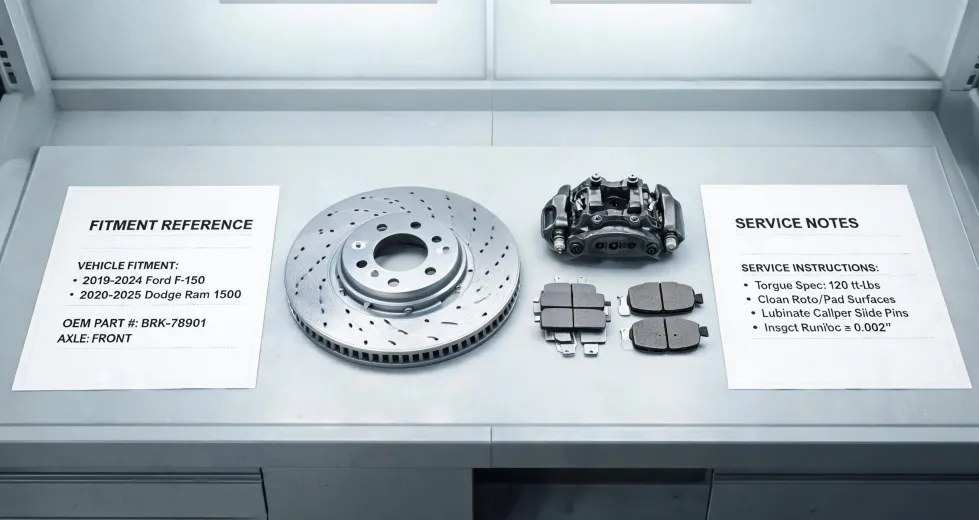
Take Raybestos Element3 brake pads as a case. The friction material is only half the story; the backing plate requires precision stamping and surface treatment. A vendor that designs the die and controls the stamping and understands the final assembly can optimize tolerances early. That means less scrap, fewer tries, and a faster time‑to‑production. The piece price might be 5% higher, but the cost of quality assurance drops by 20% or more. I’ve seen this twice now — upgrading from a “budget” stamping supplier to an integrated one cut our rejection rate from 3.1% to 0.4% on a Raybestos brake pads project.
What About Budget Constraints? (A Fair Question)
I get why people still chase the lowest quote. Finance says “reduce unit cost by 10% this year.” Engineering says “we need the part now.” The pressure is real. But I’d argue that adopting a TCO mindset actually helps meet those targets, not hurts it. When we switched to a vendor that offered high‑precision progressive dies for strut caps and cbc with manual differential components, our upfront tooling cost was 12% higher. Yet the die lasted 40% longer, and we eliminated two secondary operations because the part came out net‑shape. The net annual cost reduction: 8%.
Granted, this requires more up‑front analysis — interviewing suppliers, touring their shops, reviewing their tooling track record. But in my experience, the conversation with Finance becomes much easier when you present a TCO projection that shows a 3‑year payback, not just a per‑piece comparison. (I really should standardize that spreadsheet and share it across our team.)
Final Word: It’s Time to Refresh Your Vendor Scorecard
We all know the classic “how to tell if you have blown head gasket” checklist: white smoke, overheating, milky oil. The symptoms are clear once you know what to look for. Similarly, the warning signs of a bad sourcing decision are there if you look at total cost: frequent change orders, rising scrap rates, hidden rush fees. The fundamentals of cost management haven’t changed — track every dollar, minimize waste — but the execution has transformed. Multi‑process integration, advanced progressive dies, and long‑term supplier partnerships are the new levers.
So my view is this: if you’re still selecting vendors based on unit price alone, you’re leaving money on the table. The industry is evolving, and the smartest procurement professionals I know are the ones who spend time understanding their suppliers’ capabilities — not just their price sheets. Next time you evaluate a Raybestos Element3 brake pads supplier or any stamping partner, run the TCO numbers first. You might be surprised at what the “expensive” option really saves.
